Where are you located?
- United Kingdom
- Italia
- España
- Portugal
- France
- Україна
- United States
- Nederland
- Deutschland
- Sverige


Where are you located?
- United Kingdom
- Italia
- España
- Portugal
- France
- Україна
- United States
- Nederland
- Deutschland
- Sverige
Impress Advanced: The expert-led treatment to help you resolve complex orthodontics.
We offer advanced orthodontic treatment for even the most complex cases. Find out how it works below.
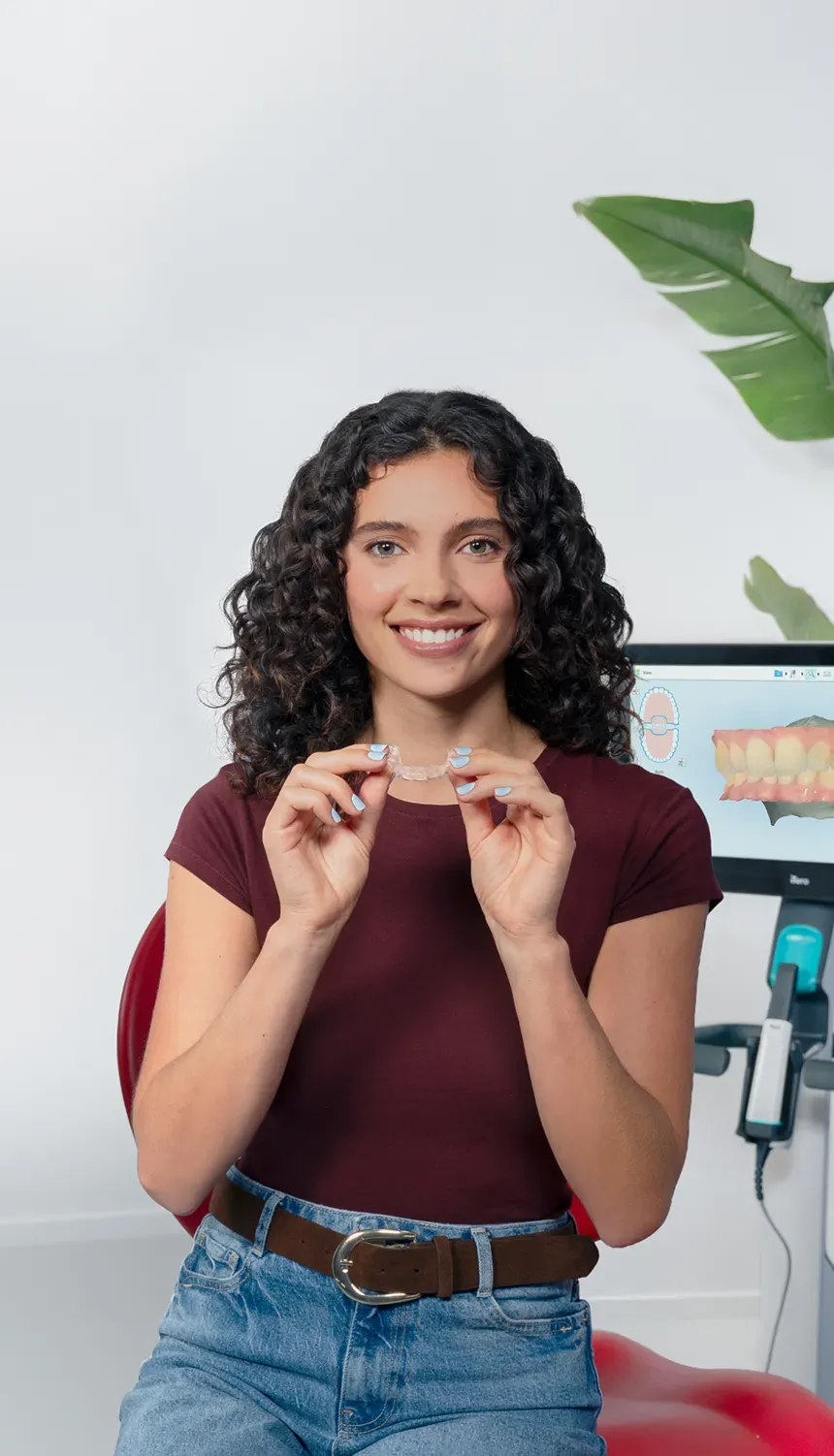

Impress Advanced: The expert-led treatment to help you resolve complex orthodontics.
We offer advanced orthodontic treatment for even the most complex cases. Find out how it works below.
Clear orthodontic treatment with microimplants
Clear orthodontic treatments with microimplants allow us to treat complex cases that previously required extractions, surgery, or fixed braces.
When is it necessary to undergo orthodontic treatment with microimplants?
In some cases, dental movements require anchorage as a counterforce to move only the necessary teeth. Orthodontic microimplants—mini or microscrews placed in the bone—provide this anchorage to achieve the desired result.
Orthodontic microimplants help to make precise movements without moving the other teeth.
What does an orthodontic treatment with microimplants involve?
It's a simple, minimally invasive technique requiring little to no anaesthesia.
Orthodontic microimplants are temporary and are used only during treatment.
They don’t leave any marks or scars.
The duration of time that micro implants are needed depends on how complex your orthodontic case is.
Microimplants in orthodontics help to move the teeth without moving the other ones.
Estimated treatment duration - 12 to 18 months

Hybrid treatment with braces and aligners
Hybrid treatments are designed for complex orthodontic cases that require a combination of braces and clear aligners to achieve the desired results.
When is it necessary to undergo a hybrid orthodontic treatment?
This type of treatment is useful for dental movements that are more easily achieved with braces than with clear aligners.
What does a hybrid orthodontic treatment with braces and aligners involve?
The first phase of treatment is done with braces and lasts a maximum of 6 months.
The second phase, which is more comfortable, discreet and quicker than braces, is done with clear aligners.
Estimated treatment duration - 12 to 18 months

Clear orthodontic treatment with distalizers
Orthodontic distalizers help correct complex anteroposterior malocclusions. They can often eliminate the need for extractions and correct the bite while preventing crowding of other teeth during the early stages of treatment.
When is it necessary to undergo an orthodontic treatment with a distaliser?
Distalisation in orthodontic treatment allows the specialist to correct the anteroposterior bite and prevent crowding during treatment.
Allows faster movements
The device can be transparent
What does orthodontic treatment with a distaliser involve?
First phase: Orthodontic treatment with a distaliser (must be used for 5-8 months) + passive aligner in the opposite arch
Second phase: treatment with aligners
Estimated treatment duration - 12 to 18 months
A treatment plan tailored to you, at the best price
Your orthodontic evaluation determines the most suitable treatment for your case. We provide comprehensive care before, during, and after treatment.

¹By number of own clinics
*Impress is Europe’s N°1 Invisalign provider, based on total operating clinics and treatments sold.
²Monthly payments of 60 instalments are available for Impress treatment of mild cases. For more details on pricing, please visit the Pricing page.
³Based on a comparison with other Invisalign® providers in United Kingdom for a comparable treatment category. T&Cs apply .
⁴Average duration for mild to moderate malocclusions
⁵T&Cs apply:
Credit is subject to status and available to UK residents aged 18 and over.
Credit decisions will be subject to your individual circumstances. Missing repayments can adversely affect your credit score.
Affordability will be assessed at the time of applying.
Smile2Impress Ltd acts as a credit broker (limited to secondary credit broking) and will introduce you to one suitable lender. Smile2Impress Clinics Ltd trading as Impress, is incorporated in England & Wales (registration number 13682612), with its registered office at 54 Brushfield Street, London E1 6AG. Smile2Impress Clinics Ltd is an Introducer Appointed Representative of Smile2Impress Ltd, which is incorporated in England & Wales (registration number 12957895), with its registered office at 54 Brushfield Street, London E1 6AG. Smile2Impress Ltd is authorised and regulated by the Financial Conduct Authority and entered on the Financial Services Register, reference number 950595.
⁶Check the terms and conditions of the promotion here .
© 2026 SMILE2IMPRESS SL. All rights reserved