


Explore the risks of DTC clear aligners and DIY dental kits
Clear orthodontics and direct-to-consumer products have experienced a boom in recent years, and it’s not surprising.
As in most fields, if the interest in a product or service grows, so does the number of companies that offer it. Home delivery impressions kits for orthodontic treatment are an attractive way to achieve the teeth you want.
To avoid choosing an orthodontic treatment that could put your health at risk, this article covers the main differences between types of at-home orthodontics. You will find out exactly which factors to consider when choosing a treatment and the risks of making a bad choice.
Are all home teeth straightening treatments the same?
It’s easy to be fooled by brands that promise to change your smile at ridiculously low prices, but beware! Not all brands are the same, nor are all methods.
We’ll explain the difference between DIY (do-it-yourself) clear aligners at home and DTC (direct-to-consumer) teeth straightening.

Unsupervised teeth straightening at home
The most common options are without a dental professional assessing you at various stages in-person. Let's explore the options some more:
Homemade “braces” and “dental aligners.”
It may sound like an attractive treatment option, but trying to make your own imprints will lead to problems long-term. Adult teeth and gums should be taken care of with proper care and professional intervention.
Online “orthodontic” devices
This option is just as dangerous as the previous one, since the aligners aren’t custom they can irritate your mouth and create new dental problems.
DIY home teeth straightening kits
These companies ask you to take an impression of your teeth without the presence of a professional yet based on that impression, they send you “custom” clear teeth aligners for you to use without professional supervision.
With this model, the risk is that patients never receive a professional diagnosis and that the treatment is not supervised by an orthodontist. They likely address problems based on the impression of DIY dental aligner kits, and do so incorrectly.
DTC aligners and devices
Initial diagnosis, but don't perform any medical follow-ups.
Direct-to-consumer orthodontics brands might carry out some initial testing before sending the clear aligners, but don't provide follow-up to patients, which can be very risky.
All of the above begs the question: does any type of at-home aligner work? The answer is simple: no. Any of these four options can put not only your oral health, but also your general health at risk.
Professionally supervised invisible aligners at home
Aside from all the dangerous, unsupervised options, there are professional orthodontic treatments that progress almost entirely at home, with minimal visits to the clinic.
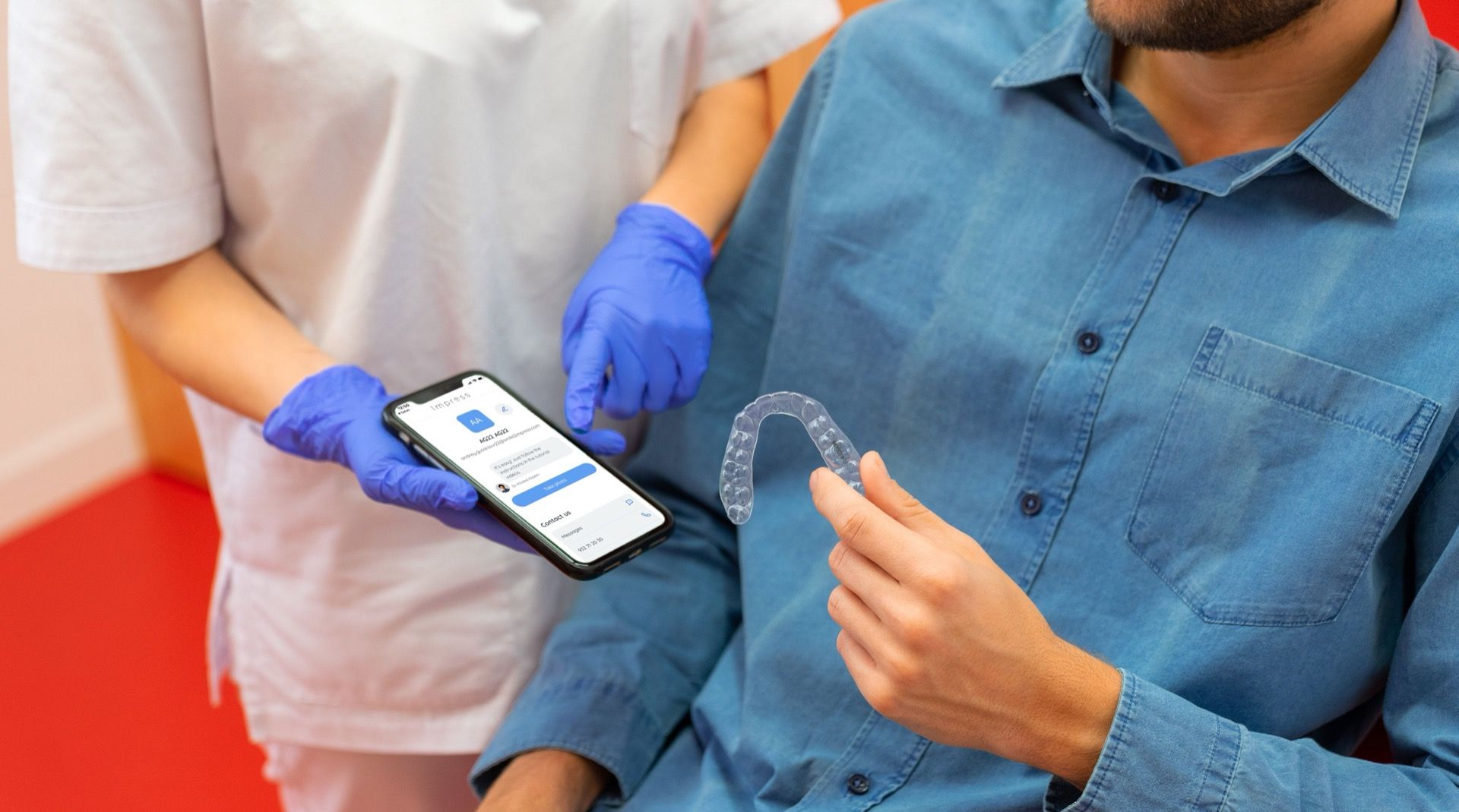
Hybrid clear aligner treatment, like the model offered by Impress, means patients don't need constant visits to the clinic. The Impress app for patients means you will still receive excellent patient care and continue to be supervised by our dentists and orthodontists to achieve a straighter smile.
In this case, the professionals diagnose the patient in person by performing all the appropriate tests. They then supervise the treatment digitally, checking that everything goes according to plan.
For example, with Impress, you don’t need to visit the clinic every time you have to change your invisible aligners; you can do it at home since our team of professionals can assess the evolution of your treatment via our app.
What are the risks of unsupervised at-home orthodontic treatments?
The type of orthodontic treatment we choose indicates how much we value our health. So the first step is eliminating any option classified as homemade orthodontics, as well as DIY and DTC braces and teeth aligners.
At-home teeth aligners aren’t safe without medical supervision. Below, we’ll discuss the risks of carrying out treatment unsupervised. The risks can be divided into four groups: functional, orthodontic, oral and aesthetic.
Orthodontic risks
The use of homemade, DTC or DIY “dental aligners" can cause the initial problems to worsen or new diseases to develop and affect the positioning of the teeth or the bite.
Oral risks
In addition to risks associated with the positioning of the teeth or the bite, using home devices or without medical supervision can cause other types of problems that can affect:
- Teeth: such as tooth sensitivity, appearance of new cavities or loss of teeth
- Gums: such as gingivitis, receding gums or worsening of periodontitis
- Tongue and cheek: such as sores, cuts or wounds
Functional risks
The inappropriate use of orthodontic devices without medical supervision can end up affecting vital oral functions. Unsupervised at-home orthodontics could have negative effects on speech, chewing, swallowing or even breathing, among others.
Aesthetic risks
New mispositionings or secondary effects mentioned above could lead to changes in our appearance.
Factors when choosing a clear orthodontic treatment
Now that we know that at-home aligners are only safe if supervised by professionals, but among so many brands offering similar treatments, how can we distinguish between those that are safe and those that aren’t?
In order to avoid any risks, we’ve compiled a list of the key factors to consider when choosing clear orthodontic treatment. If any orthodontic treatment you are considering doesn’t include every one of the following guidelines, it should be ruled out.
Getting a professional diagnosis
Receiving a good diagnosis from a qualified orthodontist is non-negotiable. This immediately eliminates all homemade and DIY teeth straightening braces and aligners. Only a professional will be able to assess your situation and develop a plan that suits your needs.
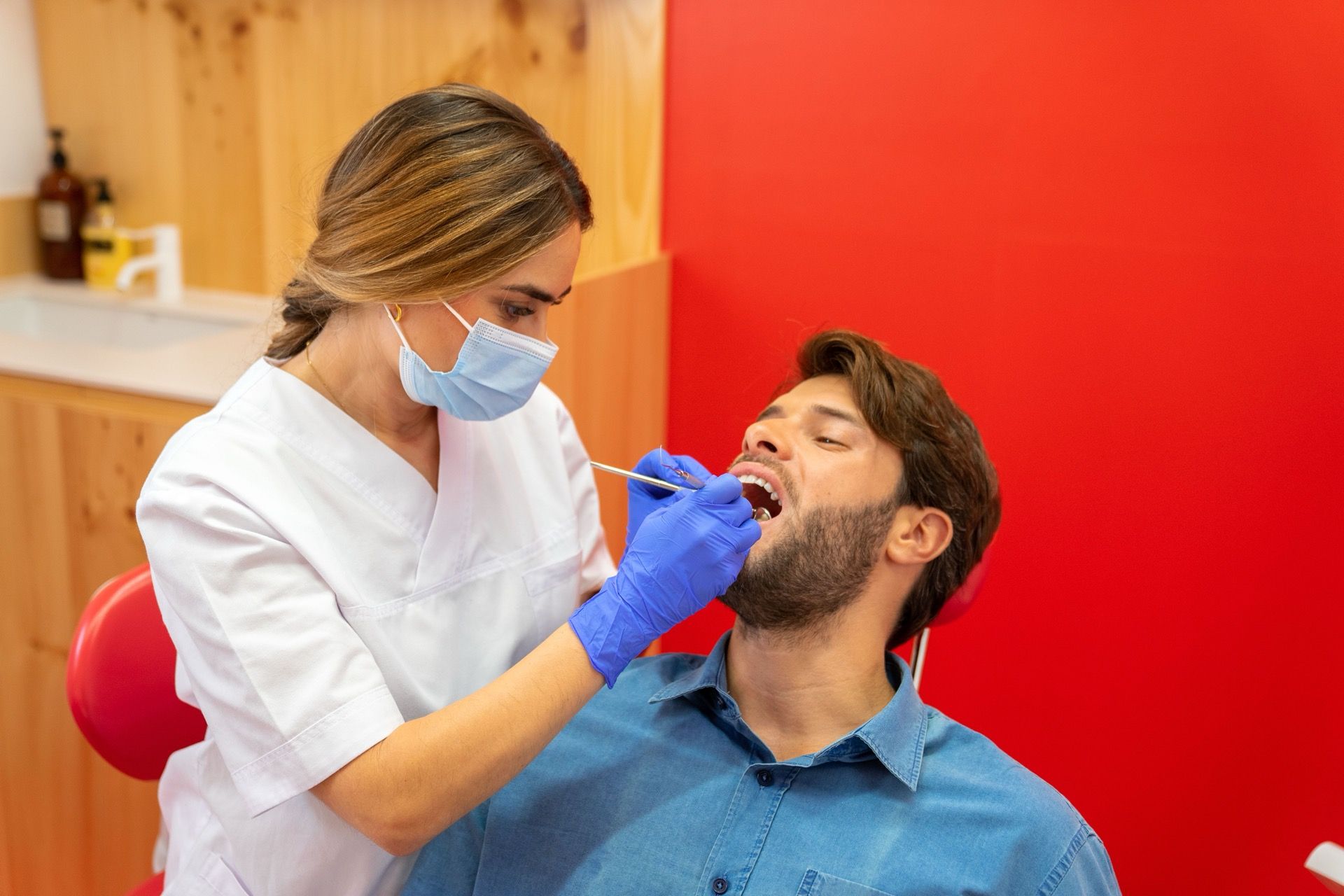
The professional must decide what type of tests the patient needs in order to know for sure if they are suitable for clear orthodontic treatment and to properly plan their treatment. Although there will be patients who need more tests than others, the two basic ones are:
- Recognition and oral examination in clinic
- Orthopantomography
These two tests allow the professional to identify anything that would prevent the patient from receiving treatment or any complexities that need to be addressed before starting, such as the onset of periodontitis, incoming wisdom teeth or cavities.
Using a suitable impression method
To create custom aligners, the orthodontist must make an initial impression of the entire set of teeth. The classic method, which is still used in many consultations, uses silicone molds.
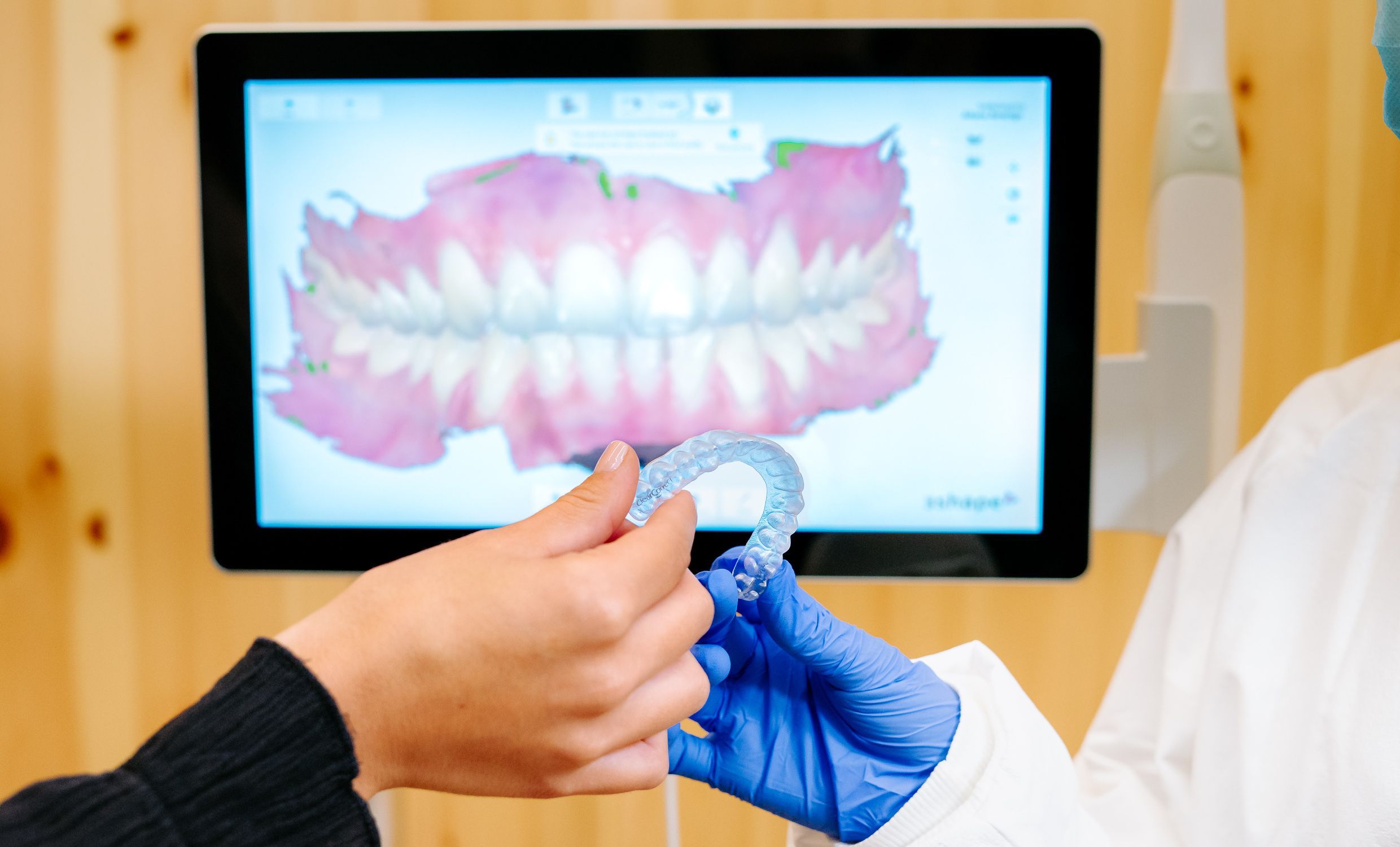
In recent years, this method (that’s somewhat cumbersome) has started to be replaced by the 3D scanning method in some clinics. Using state-of-the-art equipment, professionals can quickly capture highly accurate impressions of the patient's mouth and generate a detailed 3D image of the entire oral cavity.
Although the latter far exceeds the traditional method in terms of efficiency and precision, both methods are valid as long as they are performed by a qualified orthodontist. It’s extremely important that any "treatments" that the patient does the impression themself, be avoided at all cost.
Total treatment customisation
Each mouth is its own world, and some standard splints do not fit correctly in many mouths. Closely linked to the previous point, another factor to consider is whether or not the aligners are 100% personalised for the patient.
It’s of the utmost importance to avoid buying online orthodontic kits that contain pre-designed splints, as this can only make the patient's pathology worse. If you’re looking for clear teeth aligners at home, make sure they’ve been specially designed for your mouth.
Complex orthodontic cases
You should also avoid going with brands that do not differentiate between the difficulty of each case. Not all dental problems can be solved by following the same treatment plan. There are cases that with certain complexities that can only be assessed by a professional.
For example, in those more complex cases, the patient may need attachments, buttons for intermaxillary rubber bands or have an IPR performed at some point in the treatment. These complementary procedures can only be performed by professional orthodontists.
Supervision by qualified orthodontic professionals
Only a professional can assess if you’re ready to switch to the next aligner, and under no circumstances can you make this decision on your own. Similarly, a specialist must review the evolution of the treatment and assess whether it’s functioning correctly.
Additionally, if any concerns arise during the treatment or if you notice something that may be preventing correct development, it’s necessary to have experts to turn to so they can resolve or evaluate the issue in greater detail.
Orthodontic check-ups
No orthodontic treatment can be considered "simple" but it’s possible to distinguish between a greater or lesser degree of complexity.
In the case of some orthodontic treatments with less complexity, monitoring can take place almost entirely from home (with digital supervision by orthodontists).
However, this isn’t true for cases that have a higher degree of complexity. For those, the orthodontist will likely recommend face-to-face consultations with some regularity (every 1 or 2 months). This means they can evaluate the evolution of the treatment in person and also perform IPRs or reposition attachments if necessary.
In addition to everything mentioned above, you can also enjoy many other advantages with Impress:
- Regardless of the treatment type, we offer fixed prices - so no surprises. We also have financing options, so you can comfortably pay for your orthodontic treatment in installments.
- You can contact our team at any time of the day, any day of the week through our app or by phone.
- With Impress there’s no middleman - we have our own medical team. Since we’re not a franchise, the entire team works under the same methodology, using the same technology and adhering to the same quality standards.
- We have the latest technology in the orthodontic field, which allows us to diagnose and plan treatments in the most efficient way possible.
- We have clinics throughout the country, and in 8 other countries around the world, so if you need to start your treatment in one city or country and finish it in another, you can.
- Lastly, in many of our clinics we have both the team and the material to perform various pre-orthodontic treatments, such as fillings, periodontal reports or hygienic cleanings. So if you need any of these pre-treatments, it won’t require other consultations.
If you’re thinking about starting a clear orthodontic treatment, contact us without any obligation, and we’ll answer all your questions. You can get in touch with us by WhatsApp, by phone at +44 20 3808 1072, or by filling out our online form. We’ll be waiting for you at your nearest Impress clinic!