Where are you located?
- United States
- Italia
- España
- Portugal
- France
- United Kingdom
- Україна
- Nederland
- Deutschland
- Sverige


Where are you located?
- United States
- Italia
- España
- Portugal
- France
- United Kingdom
- Україна
- Nederland
- Deutschland
- Sverige
Impress Advanced: Advanced orthodontic treatment with Impress.
We offer advanced orthodontic treatment for even the most complex cases. Find out how it works below.
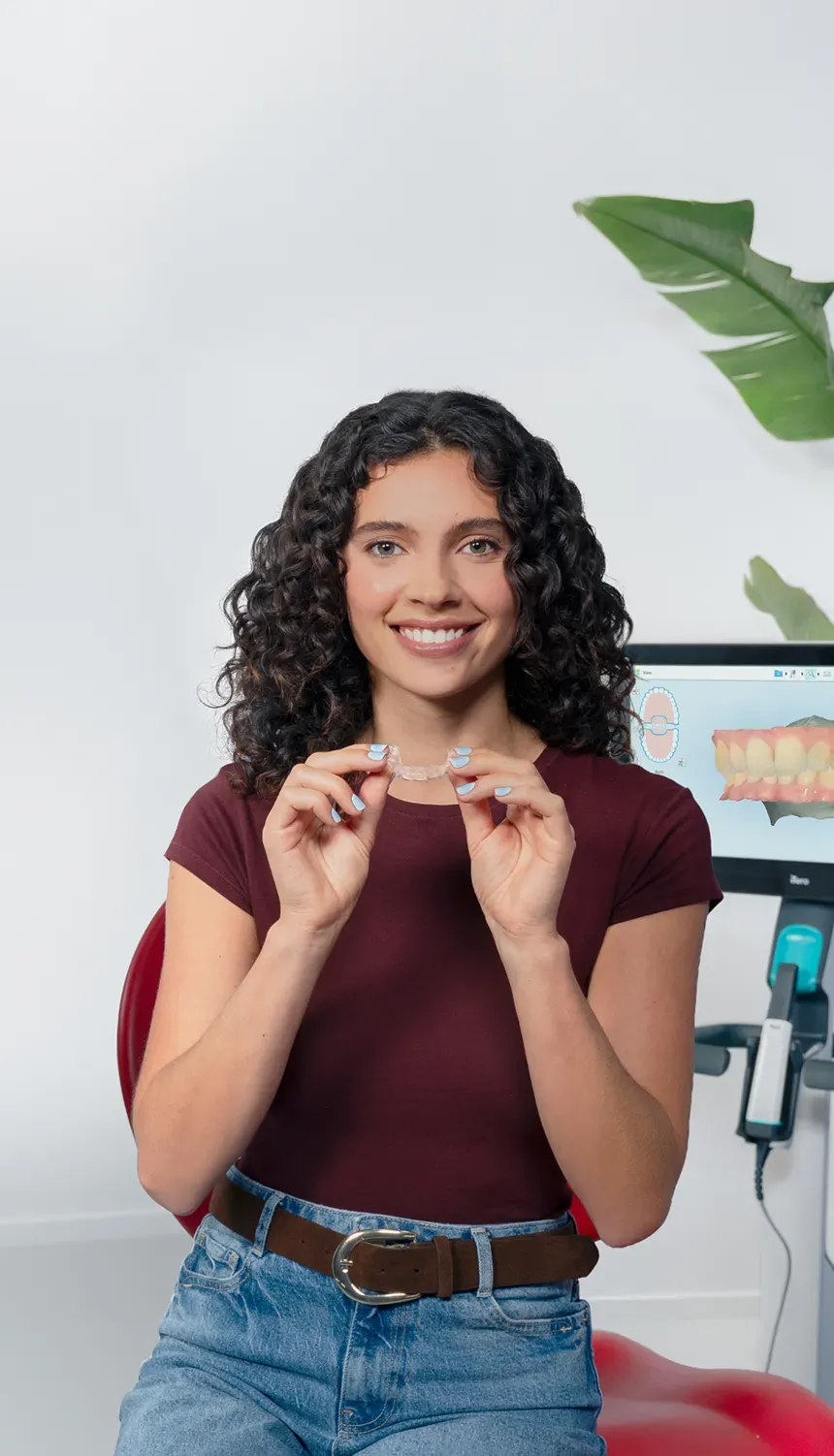

Impress Advanced: Advanced orthodontic treatment with Impress.
We offer advanced orthodontic treatment for even the most complex cases. Find out how it works below.
Complex dental cases
Clear orthodontic treatments may also use microimplants to correct cases that once required extractions, surgery, or traditional braces.
Microimplants in orthodontics
In some cases, microimplants provide the anchorage needed to move specific teeth without affecting others. These small titanium screws act as a stable counterforce, enabling precise, controlled, and predictable tooth movement.
Orthodontic microimplants make it possible to move teeth precisely without affecting the others.
What does orthodontic treatment with microimplants involve?
It's a straightforward procedure that usually requires very little anesthesia.
Orthodontic microimplants are temporary and are only used during your treatment.
They don’t leave any marks or scars.
The duration of time you need micro implants depends on how complex your orthodontic case is.
Microimplants in orthodontics help to move the teeth without moving the other ones.
Estimated treatment duration - 12 to 18 months

Hybrid treatment with braces and aligners
Hybrid treatments are designed for complex orthodontic cases that require a combination of braces and clear aligners to achieve the desired results.
When is it necessary to undergo a hybrid orthodontic treatment?
This type of treatment is useful for dental movements that are more easily achieved with braces than with clear aligners.
What does a hybrid orthodontic treatment with braces and aligners involve?
The first phase of treatment is done with braces and lasts a maximum of 6 months.
The second phase, which is more comfortable and quicker than braces, is done with clear aligners.
Estimated treatment duration - 12 to 18 months

Clear orthodontic treatment with distalizers
Orthodontic distalizers help treat complex anteroposterior malocclusions. They can avoid extractions and correct the bite without causing crowding of other teeth during the early stages of treatment.
When is it necessary to undergo an orthodontic treatment with a distaliser?
Distalisation in orthodontic treatment allows the specialist to correct the anteroposterior bite and prevent crowding during treatment.
Allows faster movements
The device can be transparent
What does orthodontic treatment with a distaliser involve?
First phase: Orthodontic treatment with a distaliser (must be used for 5-8 months) + passive aligner in the opposite arch
Second phase: treatment with aligners
Estimated treatment duration - 12 to 18 months
Get the best price for the treatment tailored for you
Your orthodontic check-up will determine which level of treatment you need. We can help with most cases we’re presented with and provide comprehensive care pre- and post-treatment.
$
163.11
/month
priceBlockTreatmentTypeFullNameadvancedPrice
Treatment duration
from 11 months
Bite correction
No

¹Monthly payments of 60 instalments are available for Impress treatment of mild cases. For more details on pricing, please visit the Pricing page.
²Based on a comparison with other Invisalign® providers in the United States for a comparable treatment category T&Cs apply .
³This site is protected by reCAPTCHA.
© 2026 SMILE2IMPRESS SL. All rights reserved